The Future of Cleaning: Inside Jabones Beltrán


When Sustainability Wasn't Yet a Conversation
How many businesses can genuinely say they are 105 years old?
Long before sustainability became a corporate buzzword, before companies proudly displayed environmental credentials on their packaging, and decades before consumers began demanding greener alternatives, Jabones Beltrán was already making soap using principles that today are recognised as "environmentally responsible".
When we first approached the Beltrán family back in 2022 to start supplying Green Embassy with their products, one question immediately came to mind: How does a company survive for more than a century while remaining relevant in an industry transformed by synthetic chemistry, mass production and changing consumer expectations?
To answer that, we first have to travel back to 1921 into Jabones Beltrán's sustainability and legacy journey.

The 1920s Landscape
Looking back, modern environmental marketing only began to emerge between the 1960s and 1980s, alongside the rise of the environmental movement. During this period, businesses began incorporating environmental claims into their branding ,sometimes genuinely, sometimes not.
In 1986, environmentalist Jay Westerveld coined the now-famous term "greenwashing" after observing a hotel encouraging guests to reuse towels "to save the environment" while simultaneously expanding its resort and damaging the surrounding ecosystem, yet in 1921, none of these conversations existed.
Companies were not competing to appear environmentally responsible because consumers were not asking them to. Corporate social responsibility, as we understand it today, had yet to develop, and environmental marketing simply wasn't part of business strategy.
Instead, industrial societies were focused on growth, productivity and efficiency. Governments promoted the conservation of natural resources - not primarily for ecological reasons, but to ensure long-term economic prosperity. Smoke-belching factories symbolised progress, industrialisation was celebrated, and pollution was widely accepted as an unfortunate consequence of modern development rather than a problem to be actively prevented.
Against that backdrop, one small family of soapmakers began a journey that would eventually outlast almost every one of its contemporaries.

The Soap Boom
Most people associate the 1920s with The Great Gatsby, the Jazz Age, flapper dresses and prohibition - not with what could be called a soap boom. Yet while much of the world remembers the decade for its glamour and excess, Mariano Beltrán Ferreres, alongside his wife María Beltrán Gimeno, was laying the foundations of a family business in Xert, Castellón, that would still be thriving more than a century later.
He had no intention of creating an ecological brand or saving the planet. He was simply building a local business from the natural resources that surrounded him.
While much of industry was embracing new chemical innovations - including products such as leaded petrol and the first generations of synthetic industrial chemicals - traditional soapmaking in eastern Spain remained deeply connected to agriculture.
Castellón was experiencing a period of remarkable growth.
Olive cultivation and textile production were flourishing, creating ideal conditions for dozens of local soapmakers to emerge. Olive oil was abundant, locally available, and perfectly suited to the centuries-old process of saponification.
At that time, synthetic petrochemical detergents had not yet come to dominate household cleaning. As a result, traditional olive oil soaps were naturally biodegradable - not because manufacturers were pursuing environmental objectives, but because that was simply how soap had always been made.
Ironically, what was once considered ordinary craftsmanship would later become one of the industry's greatest environmental advantages.

A Century Preserved in Soap
When Mariano Beltrán registered his business and paid his first industrial taxes in 1921, he wasn't selling sustainability. He was selling soap.
His products were created for household cleaning and personal hygiene, using the knowledge and materials available at the time - not to satisfy environmental certifications or ecological consumer demand.
Over the following decades, however, the cleaning industry changed dramatically.
Synthetic detergents transformed global markets, petrochemical formulations became the industry standard, and the overwhelming majority of the traditional soap factories that once operated across Castellón disappeared.
Jabones Beltrán did something remarkably simple: they refused to abandon the craft that had defined them from the very beginning.

Accumulated Knowledge Is Timeless
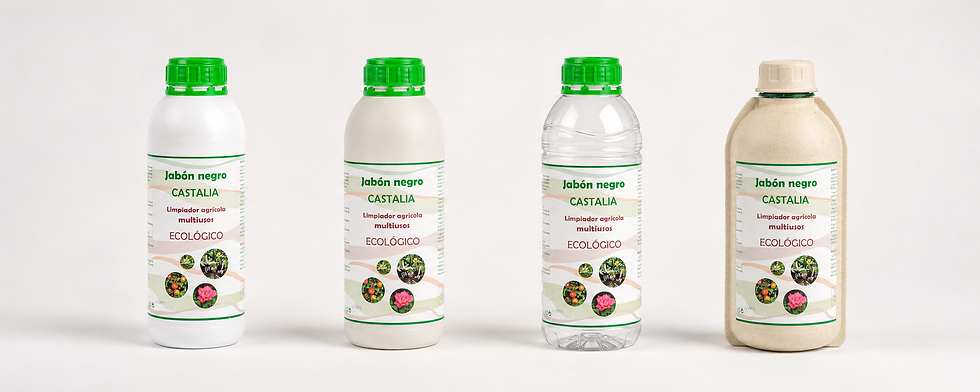
What had been considered a conventional recipe in 1921 gradually became something exceptional. Their expertise in traditional soapmaking evolved into products that remain relevant today. My personal favourite, the Castalia Black Soap, was first developed in the mid-twentieth century and became a benchmark in agriculture thanks to its versatility and concentrated formulation.
Building upon generations of accumulated knowledge, the company launched Biobel in 2011, becoming the first Spanish brand to obtain official ecological certification for laundry care products. Six years later, Essabó extended that same philosophy into personal care, earning recognised certifications such as NATRUE and Bio Vida Sana for formulations based entirely on natural-origin ingredients.
Looking back, it is difficult not to see the irony.
By remaining faithful to methods developed more than a century ago, Jabones Beltrán found themselves practising many of the principles that now define sustainable manufacturing - long before sustainability became part of the business vocabulary.
That is precisely why we wanted to speak with them and share their story with you!
Not simply because they make ecological products, but because they offer something far rarer: a living connection between traditional craftsmanship and modern environmental thinking. Heritage is something scarce nowadays. This is a story worth knowing. A brand worth following.
Over the following conversation, the Beltrán family opens the door to six generations of accumulated knowledge and shares how a company founded in 1921 continues to innovate without losing sight of the principles that have guided it from the very beginning.

Chapter One: Tradition isn't the opposite of innovation
When people hear the phrase traditional soapmaker, they often imagine a company resisting change. After spending time with the team at Jabones Beltrán, we discovered precisely the opposite.
Innovation has always been part of their story - not by abandoning tradition, but by allowing traditional knowledge to evolve.
As they explained to us:
"For us, preserving tradition does not mean remaining anchored in the past. It means protecting the essence of the soapmaking craft while combining it with innovation and the needs of today's world."
That philosophy has guided the company for more than a century.
Rather than replacing craftsmanship with automation, they have used modern technology to improve quality, consistency and environmental performance while preserving the expertise that only generations of experience can provide.
As they put it:
"Tradition does not mean resisting change. Quite the opposite - it means using everything we have learned through generations of soapmaking to meet the needs of modern consumers."
Perhaps the sentence that best summarises their journey is this:
"Our evolution has never been about replacing craftsmanship with technology. Instead, it has been about applying innovation to the soapmaking craft - using generations of accumulated expertise to create products that meet today's needs while remaining faithful to the values of honesty, quality, close customer relationships and respect for raw materials that have always defined Jabones Beltrán."
At Green Embassy, we often say that sustainability begins with longevity. Businesses that survive for generations tend to do so because they continually adapt without compromising their core values. Jabones Beltrán is a compelling example of exactly that.

Chapter Two: Sustainability starts long before the bottle
One of the biggest misconceptions surrounding sustainable products is the belief that sustainability can be reduced to a single ingredient or a recyclable package.
The conversation with Jabones Beltrán challenged that idea at every turn.
They don't judge sustainability by one component. They look at the entire life cycle of a product.
As they explained:
"For us, sustainability is not simply about choosing a particular ingredient - it is about evaluating the formulation as a whole: where the raw materials come from, how they are processed, how effectively they perform, and what happens to the product after it has been used."
That systems-thinking approach closely aligns with how we evaluate every product Green Embassy offers, including our latest kit, The Eco Box, designed to help conscious consumers take the first step towards sustainable, low-waste living.
For Jabones Beltrán, the conversation goes even deeper.
Rather than chasing trends, they apply the principles of green chemistry throughout product development.
"We develop formulations based on the principles of green chemistry, selecting every ingredient according to its function, origin and environmental profile, while avoiding unnecessary ingredients wherever possible."
And this philosophy naturally extends well beyond regulatory compliance.
"Our objective is to achieve the best possible balance between product performance and environmental responsibility. Developing biodegradable products is not simply about meeting regulatory requirements - it reflects our approach to innovation: creating effective solutions that perform exceptionally well while minimising their environmental impact once they have been used."
That balance between performance and environmental responsibility is precisely what Green Embassy looks for when recommending products to our community, and it is one of the reasons we create content like this. We create a bridge over the unknown and make new connections possible.

Chapter Three: Performance is part of sustainability
There is another misconception we often encounter - and perhaps one of the biggest reasons people hesitate to embrace more sustainable lifestyles or switch to lower-waste products.
Many assume that environmentally responsible alternatives require compromise, that choosing a refill, a solid shampoo, a concentrated cleaner or a plastic-free product somehow means sacrificing convenience, performance or quality.
People often worry that moving away from familiar brands, long-established habits or conventional products will somehow downgrade their lifestyle. Our experience has been quite the opposite.
The most successful sustainable products are not those that ask people to lower their expectations - they are the ones that meet or exceed them. When a product performs exceptionally well while using fewer resources, generating less waste and reducing its environmental impact, sustainability stops feeling like a sacrifice and starts feeling like an upgrade.
That is precisely the philosophy we recognised throughout our conversation with Jabones Beltrán.
"Consumers no longer believe they should have to choose between performance and sustainability—they expect both."
We couldn't agree more. If a product performs poorly, consumers simply won't continue using it. True sustainability depends on products becoming everyday choices - not occasional alternatives.
This philosophy explains why their formulations continue evolving.
"Our aim is to create products that are effective, enjoyable to use and responsibly formulated, while reducing unnecessary packaging and maintaining the high quality standards that have always characterised Jabones Beltrán."
Perhaps this explains why products such as Castalia continue thriving after decades on the market.
As they told us:
"Its continued success demonstrates that when a product is genuinely well formulated and truly effective, it does not need to abandon its identity in order to remain relevant."
Looking ahead, their vision remains remarkably clear.
"We believe the future of the industry lies in combining tradition with innovation—continuing to develop products that are effective, environmentally responsible and respectful of both people and the planet."
Their experience demonstrates something increasingly important in today's marketplace:
"...it is entirely possible to evolve continuously without abandoning the values that have always defined our products."

Chapter Four: Three products that embody this philosophy
We first discovered Jabones Beltrán in 2022, at a time when I was searching for brands I could genuinely trust to help run Green Embassy in a way that was as sustainable and as closely aligned with nature as possible. It was a period of questioning everything - from the products we used to the values of the companies behind them.
The sustainability space can be incredibly noisy. Without discipline, careful research and the courage to keep asking questions, it becomes surprisingly easy to follow trends instead of principles, and to lose sight of what really matters.
It didn't take long for Jabones Beltrán's products to become part of our everyday lives. Today, we use them in our office, throughout our projects and in our own homes. The reason is simple: their philosophy isn't just something they talk about - it is reflected in every product they make. That is exactly why we chose to include Jabones Beltrán in The Eco Box.
As we learned more about their history and gradually incorporated their products into our daily lives, we realised we weren't simply choosing better cleaning products; we were supporting a company whose values had remained remarkably consistent for more than a century. That is rare!
That conviction is reflected in the selection we made for The Eco Box. It is why we chose to include Castalia´s Black Soap, Biobel's Solid Dishwashing Soap and Essabó's Solid Shampoo and Body Soap Bars - products that embody the same principles of quality, simplicity and environmental responsibility that have guided Jabones Beltrán since 1921.

Castalia: Bringing You That Black Magic
When people say less is more, this is exactly what they mean.
Castalia perfectly illustrates the power of simplicity. One concentrated product. Multiple dilutions. Countless applications. An extraordinary range of possibilities.
Rather than developing a different product for every cleaning task, Jabones Beltrán has refined a single, highly concentrated black soap (historically known as Castalia Bio Potassium Solution) capable of tackling countless jobs throughout the home, the garden and beyond.
As they explain:
"The saponification process transforms plant oils into soap, creating a highly concentrated and exceptionally versatile formulation. This means it can be diluted in different ways for numerous applications, allowing a relatively small amount of product to deliver outstanding performance."
For Green Embassy, this perfectly illustrates that sustainability isn't about doing with less - it's about needing less. Fewer products, fewer bottles, less waste, less weight to carry, less storage space and, ultimately, better value for money.
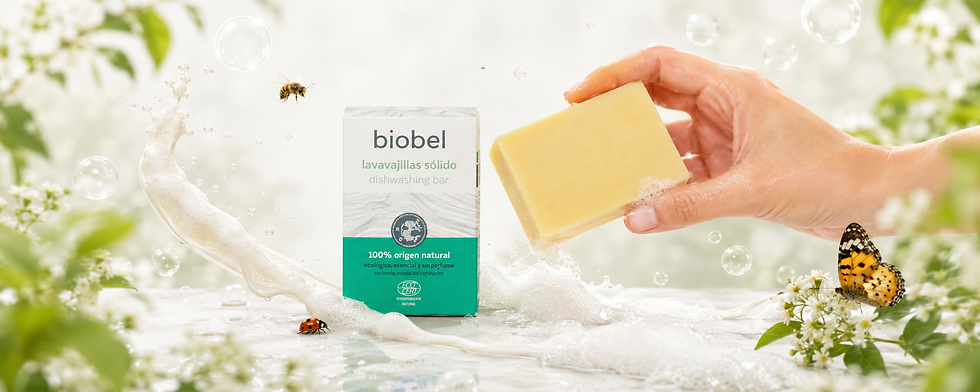
Biobel: Thinking Outside the Box
We often assume innovation means adding something new. Sometimes, the most meaningful innovation comes from taking something away.
Biobel demonstrates that sustainability isn't just about replacing plastic. It's about rethinking the product itself. Many conventional household cleaning and personal care products arrive in plastic packaging - much of which is still made from virgin plastic - and a significant proportion of their contents is simply water. That means consumers are often transporting, storing, and paying for something they already have in abundance at home, while the active ingredients are diluted into a ready-to-use product. Biobel takes a different approach.
By removing unnecessary water and embracing concentrated solid formulations, the product becomes lighter to transport, easier to store, requires less packaging, and delivers a more efficient use of resources throughout its life cycle.
"At Biobel, we see the solid format as an opportunity to rethink everyday products through innovation and efficiency."
The conversation also highlighted an important point that is often overlooked.
"Consumers increasingly value solutions where sustainability goes beyond the packaging itself. Product concentration, accurate dosing, ingredient selection and performance during use are all equally important considerations."
This holistic perspective is exactly why Biobel has become a cornerstone of The Eco Box.

Essabó: Placing Homes on Solid Foundations
Because sustainable choices should feel personal.
Essabó brings more than a century of soapmaking expertise into modern personal care. We often think of sustainability as something that begins in our homes. But if our body is our first home, then the products we use on it deserve just as much thought and intention. Its colourful, thoughtfully designed and specialised range transformed the humble soap bar into something far more personal.
From shaving bars and solid shampoos to exfoliating soaps and formulas tailored to different skin and hair needs, Essabó demonstrates that choosing a sustainable product doesn't mean settling for fewer options - it means choosing better ones.
As Jabones Beltrán describe it:
"Ultimately, Essabó represents a natural evolution of our heritage: applying five generations of soapmaking knowledge to create solid cosmetics that are practical, responsible and suited to modern lifestyles, while preserving the artisanal character that has always defined our products."
For us, it demonstrates that innovation doesn't always mean creating something entirely new.
Sometimes it means reimagining what already worked exceptionally well.

Final Chapter: The future belongs to circular thinking
Plastic remains one of the defining environmental challenges of our time. Every industry depends on it. Every community lives with its consequences. And no single company, product, or innovation will solve the problem alone.
"We believe the future of plastic lies in using it more responsibly and more circularly: reducing its use wherever viable alternatives exist, increasing recycled content, and designing packaging that is easier to reuse and recycle—while always ensuring the quality, safety and performance our customers expect."
Equally important is their willingness to improve step by step.
"Our commitment is to continue moving forward step by step: reducing plastic wherever practical alternatives exist, progressively increasing recycled content, and developing packaging solutions that are genuinely sustainable from environmental, technical and functional perspectives."
This pragmatic approach resonates strongly with Green Embassy. We know perfect solutions rarely exist. Meaningful progress does. I personally would love to see the Castalia Black Soap come full circle and have a 100% biodegradable packaging end-of-life. Maybe the near future will already bring recycled R-HDPE? Wink, wink.
Symbiotic Relationships: Shared values create greater impact.
Green Embassy is much more than a plant design, installation, and maintenance company.
Our mission extends far beyond the products we use and the services we provide. It flows through every initiative we launch, every article we write, every post we share on social media, and every workshop we host for our growing community of like-minded nature lovers.
Our commitment, our values and our devotion are deeply rooted in principles that those who speak the language of ecology instinctively understand.
Nature rarely thrives in isolation; it grows through connection. Through collaboration. Through countless symbiotic relationships that strengthen entire ecosystems.
We believe meaningful change works in the same way.
The organisations that create the greatest impact are rarely those working alone.
They are the ones whose values naturally intertwine, allowing each to amplify the other's purpose.
Throughout our conversation with Jabones Beltrán, one answer resonated with us more than any other because it perfectly captured why collaborations like these matter:
"For us, collaborations like these are particularly valuable because they transform shared values into tangible action and help drive a more conscious and responsible model of consumption."
That sentence could easily describe Green Embassy's own mission.
Every product we recommend is chosen because it supports a larger conversation about how we consume, how we care for our homes and gardens, and how small everyday decisions collectively shape a healthier future.

Final thoughts
When we asked Jabones Beltrán what they hoped readers would remember after reading this interview, their answer was beautifully simple.
"We would like readers to remember that Jabones Beltrán is, above all, a family-run soapmaker that has kept a traditional craft alive for more than a century."
They continued by explaining that five generations have preserved the knowledge of traditional saponification while continually adapting it to modern needs, creating products that are effective, responsible, and aligned with a more conscious way of living.
If they had to summarise everything in a single sentence, it would be this:
"We innovate from a foundation of tradition, never losing sight of our respect for the product, for people and for the environment."
And perhaps no quote better captures the spirit of the entire conversation than the one they left us with:
"True sustainability requires both strong roots and the willingness to keep growing."
After speaking with the team behind Jabones Beltrán, we couldn't think of a more fitting conclusion. It is a reminder that the most sustainable businesses are not those that chase the latest trend, but those that continue evolving while remaining faithful to the principles that have guided them from the very beginning.
This is Jabones Beltrán's sustainability and legacy journey, shared with you by Lucas Cruz Bueno.
Follow @jabonesbeltran, @biobeleco and @essaboeco
Visit their shop via this link.

Thank you for reading!
Stay green, stay rooted.
Love, Lucas
I would love to hear your comments.


Comments